
- Home
- Entire Malaysia
- Selangor▼
- Furniture & Decoration
- antik table and stool set
antik table and stool set
List-ID: 11489086231 May 10:25
Description
Specification
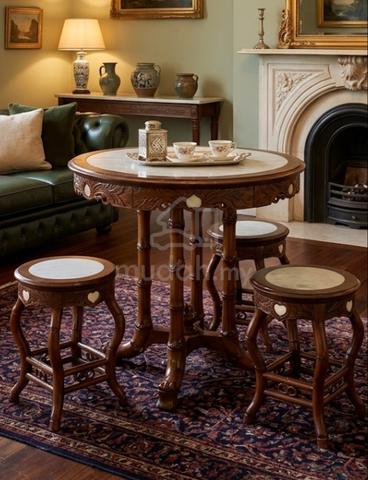
- This specific style of table and stool set is steeped in Peranakan (Baba-Nyonya) and Straits Chinese heritage, originating in the Straits Settlements (Malacca, Penang, and Singapore) during the late 19th and early 20th centuries.
While it looks similar to standard coffee shop furniture, its intricate design elements mark it as an upscale, residential family piece rather than a commercial one. Here is the breakdown of the cultural blend that created it:
1. The Design Origin: Chinese Symbolic Art
Every carved detail on your set carries deep cultural meaning rooted in traditional Chinese symbolism:
The Faux-Bamboo Legs: The legs of both the table and stools are carved to look like segments of bamboo. In Chinese culture, bamboo represents resilience, longevity, and moral integrity because it bends in the wind but never breaks.
The Heart/Petal Inlays: The white heart-shaped accents on the apron of the table and stools are beautifully carved mother-of-pearl or white marble inlays. In Peranakan furniture, these often represent stylized lotus petals or peach blossoms, which symbolize purity, harmony, and prosperity for the household.
2. The Fusion: Straits Eclectic Style
This set is a perfect example of "Straits Eclectic" design, blending different cultural influences into a unique luxury item:
The Marble Tops: The cool-to-the-touch natural marble tops were highly favored in the tropical heat of British Malaya. Historically, this premium marble was imported from Italy (Carrara) or sourced locally from the famous quarries of Ipoh, Perak.
The Frame: The rich, dark wood is typically teak or rosewood, favored for its durability against tropical humidity and pests.
original heritage piece passed down through generations or acquired from a genuine Peranakan estate, it likely dates between 1950

Mudah Safety Tip
If it is a meet-up/COD, always inspect item condition on site before paying. Find out more safety tips in MudahSafety!
Do you find this ad suspicious or inappropriate?
Report this ad (List-ID: 114890862)Is this your ad? Manage it using these links.
You May Also Like

Price
RM 4,500
Location
Selangor - Petaling Jaya
Condition
Second-hand (Used)
Company
Share this ad